Botox Treatment Trends in the United States: What Patients Should Know in 2026
Botox treatments continue to rank among the most commonly discussed non-surgical cosmetic procedures in the United States. As awareness of minimally invasive aesthetic options increases, dermatology clinics and aesthetic practices report sustained demand for injectable treatments designed to reduce visible signs of aging.
At the same time, healthcare professionals emphasize the importance of understanding how Botox works, what results patients can expect, and why treatments should always be performed by licensed medical providers.
This overview examines current trends surrounding Botox treatment in the U.S., including how the procedure works, typical treatment uses, safety considerations, and the growing role of cosmetic injectables in modern aesthetic medicine.
 What Is Botox Treatment?
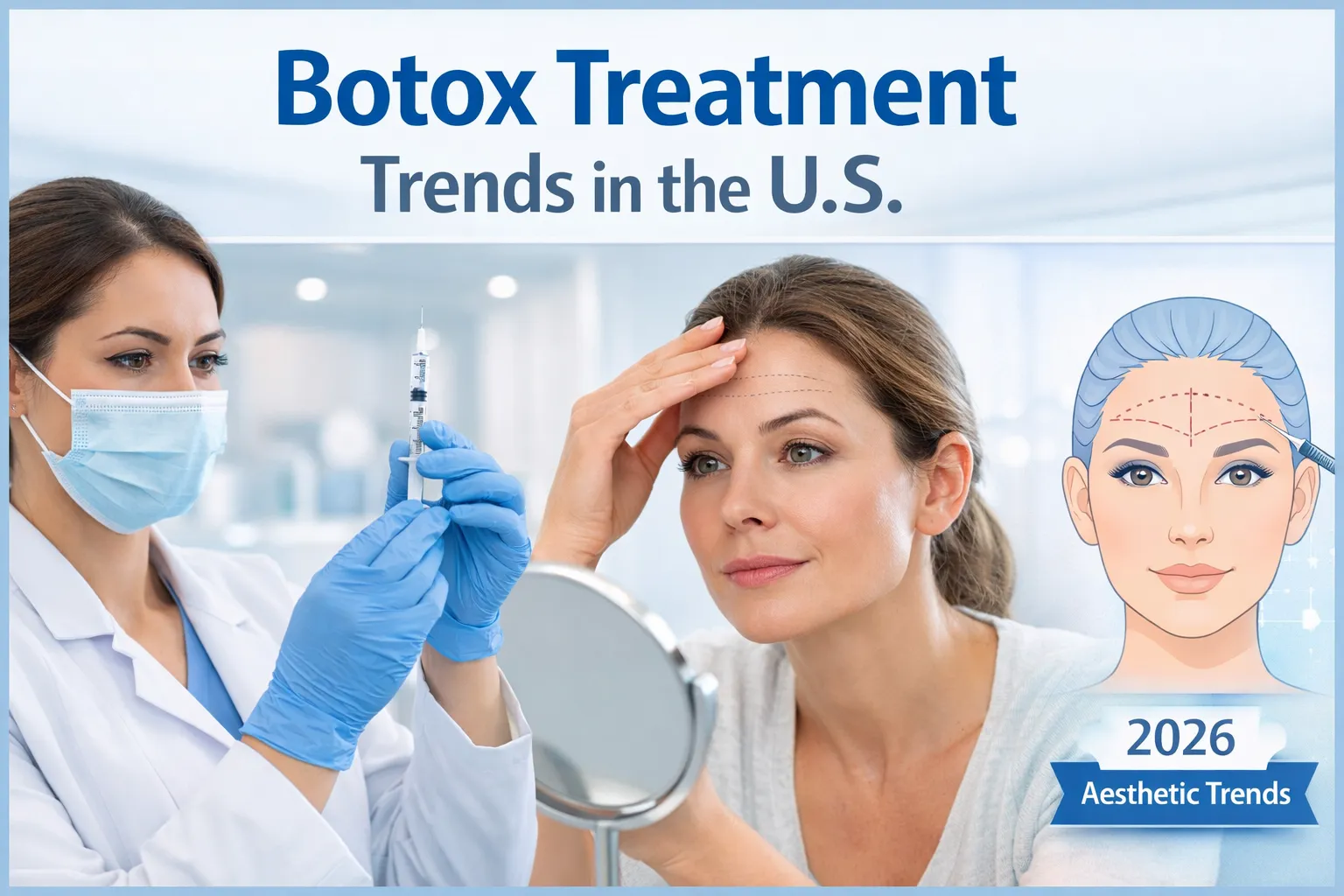
Botox is a cosmetic and medical treatment that uses a purified form of botulinum toxin type A, a substance that temporarily blocks nerve signals responsible for muscle contraction. When injected into targeted facial muscles, it reduces their movement and can soften the appearance of dynamic wrinkles such as frown lines, forehead lines, and crow’s feet.
Although widely recognized for cosmetic use, Botox is also used in medical treatments. Physicians may prescribe it for conditions such as chronic migraines, muscle spasms, excessive sweating, and overactive bladder.
In cosmetic dermatology, Botox has become one of the most frequently requested procedures because it offers a relatively quick treatment time and does not require surgery.
Why Botox Treatments Remain Popular
Several factors have contributed to the growing popularity of Botox procedures in recent years.
First, treatments are minimally invasive. Most sessions typically involve small injections administered in a clinical setting and often take less than 30 minutes.
Second, recovery time is minimal. Patients can usually resume daily activities shortly after treatment.
Finally, the effects are temporary but noticeable. Results generally appear within days and often last around three to four months, after which follow-up treatments may be considered to maintain the effect.
Because of these characteristics, Botox has become a common option for individuals seeking non-surgical aesthetic procedures.
FDA Approval and Regulated Products
Botox products used in the United States are regulated by the U.S. Food and Drug Administration (FDA). The agency has approved botulinum toxin injections for several cosmetic uses, including the temporary improvement of forehead lines, frown lines between the eyebrows, and crow’s feet around the eyes.
In addition to Botox itself, several other botulinum toxin formulations have been approved for cosmetic use in the U.S., including Dysport, Xeomin, Jeuveau, Daxxify, and Letybo.
Healthcare providers typically choose among these products depending on patient goals, treatment areas, and clinical experience.
Safety and Professional Administration
Medical experts emphasize that Botox treatments are generally considered safe when administered by qualified professionals. Most side effects are mild and temporary, such as slight swelling, redness, or discomfort at the injection site.
However, safety depends heavily on proper technique, dosage, and the use of regulated products. When used correctly, complications are uncommon, and the treatment has been studied extensively in both cosmetic and medical settings.
Health authorities recommend that patients seek treatment only from licensed providers such as dermatologists, plastic surgeons, or trained medical professionals.
Concerns About Unregulated or Counterfeit Products
While the popularity of cosmetic injections continues to grow, regulators have raised concerns about counterfeit or unapproved botulinum toxin products entering the market.
Health authorities have warned that unauthorized versions of Botox may pose serious risks because they may contain incorrect ingredients or improper dosages.
In recent cases, law enforcement actions have also targeted individuals performing cosmetic injections without proper medical licenses, highlighting the importance of seeking treatment in regulated medical environments.
Experts advise patients to verify that providers use FDA-approved products and perform treatments in licensed clinical settings.
How Long Results Typically Last
Botox effects are temporary because the treatment gradually wears off as nerve signals return to normal.
Most patients notice results beginning within several days, with full effects typically appearing within two weeks. Results usually last around three to four months, although individual responses may vary depending on factors such as metabolism, muscle strength, and treatment area.
For this reason, individuals who wish to maintain results often schedule repeat treatments several times per year.
The Expanding Role of Cosmetic Injectables
Botox has played a major role in the broader growth of non-surgical aesthetic treatments. Many clinics now offer injectable procedures as part of comprehensive cosmetic dermatology services.
Beyond wrinkle reduction, aesthetic specialists may combine Botox treatments with other non-surgical approaches such as dermal fillers, skin resurfacing, or laser treatments to address different aspects of facial aging.
The continued development of new botulinum toxin formulations and injection techniques may further expand treatment options in the coming years.
Conclusion
Botox treatment remains one of the most widely recognized non-surgical cosmetic procedures in the United States. Its ability to temporarily relax facial muscles and reduce the appearance of dynamic wrinkles has contributed to its ongoing popularity in aesthetic medicine.
However, medical professionals emphasize that patients should approach cosmetic injections with careful consideration. Understanding how Botox works, verifying provider credentials, and ensuring that approved products are used all play an important role in maintaining safety.
As demand for minimally invasive aesthetic treatments continues to grow, Botox is expected to remain a central part of cosmetic dermatology discussions and treatment options in the U.S.