Exploring Mental Health Support: A Guide to Understanding Services and Locating Qualified Professionals for Anxiety and Well-being
Exploring Mental Health Support
A practical guide to understanding mental health services and finding qualified professionals who can support anxiety management and overall well-being.
Mental health plays a crucial role in overall quality of life. This guide provides an overview of available support services, treatment approaches, and practical steps for locating qualified professionals.
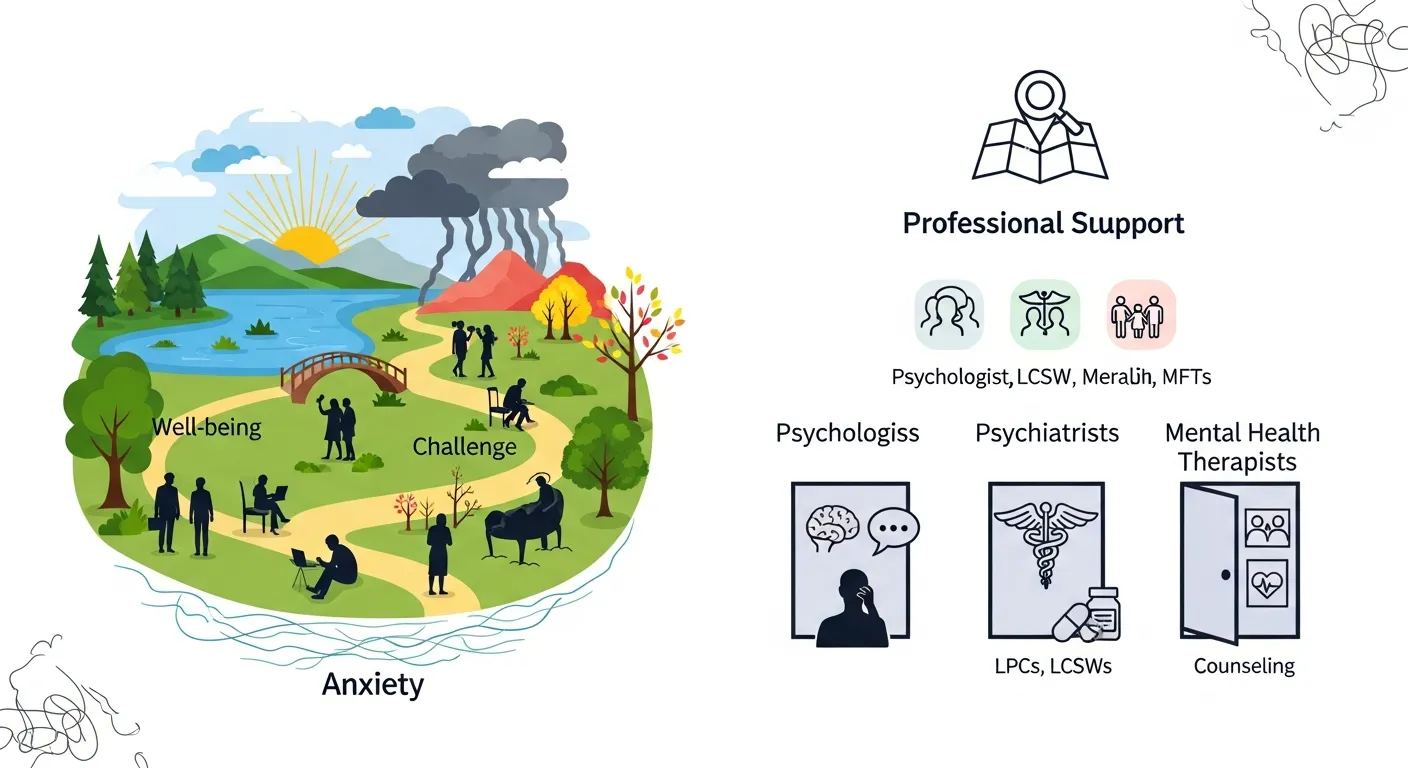
Understanding Mental Health Support
Mental health support refers to a wide range of professional services designed to help individuals manage emotional, psychological, and behavioral challenges.
People may seek mental health support for many reasons, including:
- Anxiety and stress management
- Depression or mood concerns
- Relationship or family challenges
- Work-related stress
- Life transitions and personal growth
Accessing the right resources can significantly improve long-term well-being and resilience.
Common Types of Mental Health Services
Therapy and Counseling
Therapy involves structured conversations with trained mental health professionals who help individuals explore thoughts, emotions, and behaviors.
Common therapy approaches include:
- Cognitive Behavioral Therapy (CBT)
- Psychodynamic therapy
- Mindfulness-based therapy
- Solution-focused therapy
Therapy sessions may occur in person or through telehealth platforms.
Psychiatric Care
Psychiatrists are medical doctors specializing in mental health conditions. They can evaluate symptoms, diagnose disorders, and prescribe medications when appropriate.
Psychiatric care may be recommended for conditions such as:
- Anxiety disorders
- Major depressive disorder
- Bipolar disorder
- Panic disorder
Medication management is often combined with psychotherapy for comprehensive care.
Support Groups
Support groups provide structured environments where individuals share experiences and coping strategies.
Benefits of support groups include:
- Emotional encouragement
- Shared experiences
- Community connection
- Reduced feelings of isolation
Many organizations offer both in-person and online support groups.
Telehealth Mental Health Services
Telehealth has expanded access to mental health care. Many therapists and psychiatrists now provide virtual sessions through secure online platforms.
Advantages may include:
- Greater accessibility
- Flexible scheduling
- Privacy and convenience
- Access to specialists outside local areas
Telehealth can be an effective option for individuals seeking support from home.
How to Find Qualified Mental Health Professionals
Finding the right professional is an important step in receiving effective support.
Key factors to consider include:
- Professional credentials and licensing
- Areas of specialization
- Treatment approaches offered
- Availability and communication style
- Insurance or payment options
Many healthcare directories and medical organizations maintain searchable databases to help individuals locate licensed professionals.
Understanding Anxiety and Its Impact
Anxiety is one of the most common mental health concerns. While occasional stress is normal, persistent anxiety can interfere with daily life.
Common symptoms may include:
- Excessive worry
- Restlessness
- Difficulty concentrating
- Sleep disturbances
- Physical tension
Professional support can help individuals develop effective coping strategies and improve emotional balance.
Steps to Begin Your Mental Health Journey
Step 1 – Recognize the Need for Support
Acknowledging emotional or psychological challenges is often the first step toward improvement.
Step 2 – Research Available Services
Explore therapy options, clinics, and professional directories to identify appropriate resources.
Step 3 – Schedule an Initial Consultation
Many mental health professionals offer introductory consultations to discuss concerns and treatment goals.
Step 4 – Develop a Care Plan
Together with a provider, individuals can create a treatment plan tailored to their needs and goals.
Additional Strategies for Supporting Well-being
Professional care often works best alongside healthy lifestyle practices.
Helpful strategies may include:
- Regular physical activity
- Balanced nutrition
- Adequate sleep
- Mindfulness or relaxation techniques
- Social connection and community support
These practices can complement professional treatment and promote long-term mental health.
Who This Guide Is For
This guide may be helpful for:
- Individuals experiencing anxiety or stress
- People researching mental health support services
- Families supporting loved ones
- Anyone interested in improving emotional well-being
Understanding available resources can make the process of seeking help more accessible and less overwhelming.
Call to Action
Take the First Step Toward Better Mental Health
Learning about available services and qualified professionals can make it easier to find the support needed for anxiety management and overall well-being.
CTA:
Explore Mental Health Support
Find Professional Resources
FAQ
When should someone seek mental health support?
Individuals may benefit from support when emotional challenges begin affecting daily life, relationships, or overall well-being.
What types of professionals provide mental health care?
Mental health care may be provided by psychologists, psychiatrists, licensed therapists, and counselors.
Is therapy confidential?
Yes. Mental health professionals follow strict confidentiality and privacy guidelines.
Can mental health services be accessed online?
Many providers offer telehealth therapy and counseling sessions through secure platforms.
Disclaimer
This content is intended for informational purposes only and does not constitute medical or psychological advice. Individuals should consult qualified healthcare professionals for diagnosis and treatment recommendations.