Beyond the Scale: Why Your BMI Calculator Needs a Body Fat Monitor
Discover why relying solely on BMI can mislead your health assessment. Learn how combining a BMI calculator with a body fat monitor gives a truer picture of fitness.
Introduction: The Numbers Game
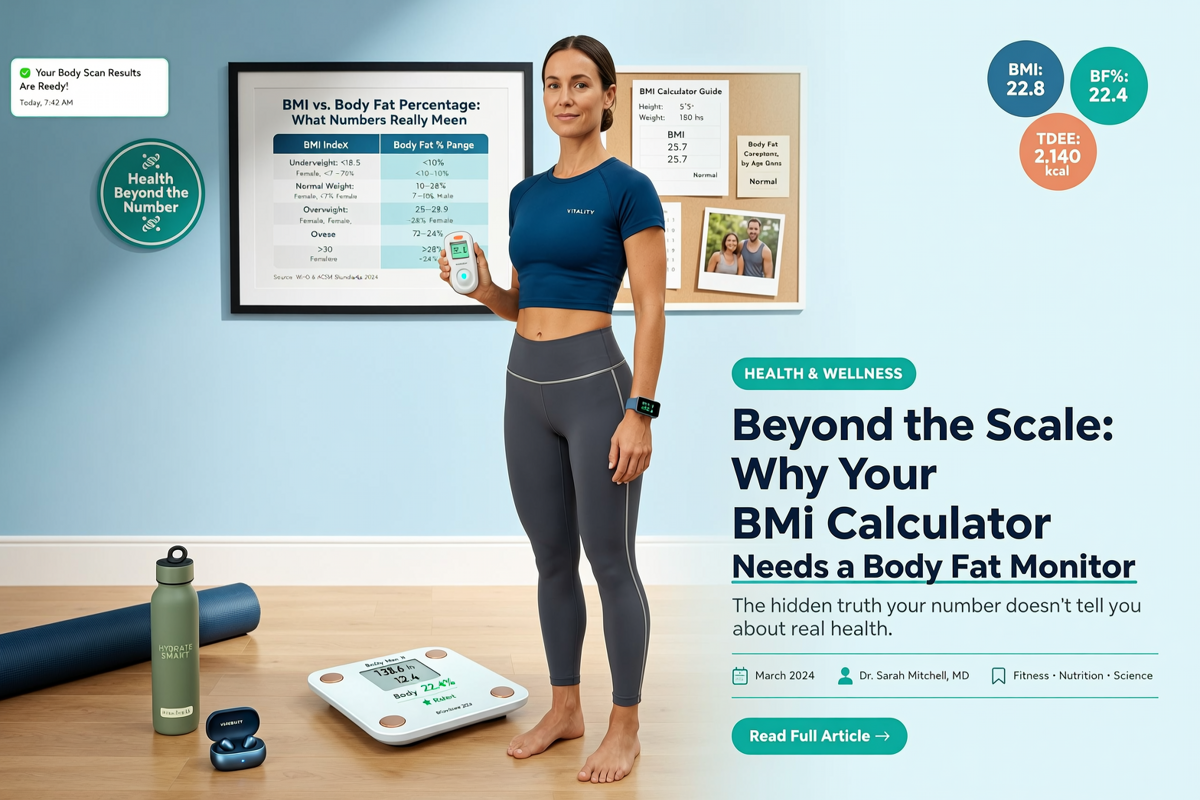
For decades, the body mass index (BMI) has been the go-to metric for assessing whether a person falls into a healthy weight range. It’s simple: plug your height and weight into a BMI calculator, and out pops a number that places you in categories like underweight, normal, overweight, or obese. But as our understanding of health evolves, so does the realization that BMI alone can be misleading. Enter the body fat monitor—a device that measures actual body fat percentage. Together, these tools offer a more complete picture of your health.
What Does a BMI Calculator Really Tell You?
BMI is a calculation based on weight and height. It’s widely used because it’s cheap, easy, and correlates with population-level health risks. However, it doesn’t distinguish between muscle and fat. A muscular athlete may have a high BMI and be labeled overweight, while a person with low muscle mass and high fat could have a “normal” BMI. This is where the BMI calculator falls short—it can’t tell you about your body composition.
The Body Fat Monitor: A Deeper Dive
A body fat monitor uses bioelectrical impedance analysis (BIA) or other methods to estimate the percentage of fat in your body. Unlike BMI, it differentiates between fat mass and lean mass. This is crucial because excess body fat—especially visceral fat around organs—is linked to metabolic diseases, regardless of BMI. A body fat monitor can track changes in fat loss or muscle gain more accurately than a scale or BMI calculator.
Why Both Tools Are Better Together
Using a BMI calculator alongside a body fat monitor gives you a dual perspective. For example, if your BMI is in the overweight range but your body fat percentage is healthy, you likely have good muscle mass. Conversely, a normal BMI with high body fat suggests you may be “normal weight obese,” a condition that carries health risks. By cross-referencing both numbers, you can set more personalized fitness and nutrition goals.
Limitations of Each Tool
No single metric is perfect. BMI doesn’t account for age, sex, or muscle mass. Body fat monitors can be affected by hydration levels, recent exercise, and device quality. For consistent results, use the same monitor under similar conditions (e.g., morning, before eating). Neither tool replaces medical advice, but together they provide a stronger foundation for health tracking.
How to Use Both Effectively
Start by calculating your BMI. Then measure your body fat percentage. Compare the two: if they align (e.g., normal BMI and healthy body fat), you’re likely on track. If they conflict, dig deeper. For instance, if your BMI is high but body fat is low, focus on maintaining muscle. If BMI is normal but body fat is high, consider reducing fat through diet and exercise. Track trends over time rather than fixating on single numbers.
Who Benefits Most from This Dual Approach?
- Athletes and fitness enthusiasts: They often have high BMI due to muscle, but low body fat. A body fat monitor validates their fitness.
- Older adults: Age-related muscle loss (sarcopenia) can lead to normal BMI but high body fat. Monitoring body fat helps catch this.
- People on weight loss journeys: The scale may not show progress if you’re gaining muscle while losing fat. Body fat percentage reveals true changes.
- Those with chronic conditions: Conditions like diabetes or heart disease are more closely tied to body fat than BMI.
Choosing the Right Body Fat Monitor
Not all body fat monitors are created equal. Look for devices that use multiple frequencies for better accuracy. Smart scales that sync with apps can track trends over time. Some monitors also estimate visceral fat, muscle mass, and bone density. For the most reliable results, consider a device that uses BIA with hand and foot electrodes, like those found in some home scales or handheld units.
Integrating Data into Your Routine
Consistency is key. Measure your body fat at the same time of day, preferably in the morning after using the bathroom and before eating or exercising. Log your BMI and body fat percentage weekly, and look for trends over months. Use the data to adjust your diet and exercise plan. Remember, health is not just about numbers—how you feel, your energy levels, and your overall well-being matter too.
The Future of Body Composition Tracking
Technology is advancing rapidly. Newer devices use 3D body scanning, DEXA-like technology, or even smartphone cameras to estimate body fat. Wearables are beginning to incorporate body composition sensors. As these tools become more accessible, the combination of BMI and body fat monitoring will become standard practice for anyone serious about health.
Conclusion: A Balanced View
The BMI calculator is a useful screening tool, but it’s not the final word. By pairing it with a body fat monitor, you gain insight into your actual body composition. This dual approach helps you avoid the pitfalls of relying on weight alone and empowers you to make informed decisions about your health. Whether you’re an athlete, a weight-loss warrior, or just someone who wants to stay healthy, using both metrics gives you a more accurate and motivating picture of your progress.