Omeprazole Uncovered: How This Heartburn Pill Actually Works
Omeprazole is a proton pump inhibitor that transforms stomach acid production. Learn how it works, its uses, side effects, and key safety tips.
If you have ever experienced the relentless burn of acid reflux, you know how disruptive it can be. That fiery sensation climbing from your stomach into your chest can turn a good meal into a memory of discomfort. Omeprazole is one of the most widely prescribed medications for this exact problem, and for good reason. It belongs to a class of drugs called proton pump inhibitors, or PPIs, which work by dramatically reducing the amount of acid your stomach produces. But how exactly does this little pill work, and what should you know before taking it?
What Is Omeprazole?
Omeprazole is an oral medication used to treat conditions caused by too much stomach acid. These include gastroesophageal reflux disease, commonly known as GERD, peptic ulcers, and Zollinger-Ellison syndrome, a rare condition in which tumors cause the stomach to produce excess acid. It is also used as part of combination therapy to eradicate Helicobacter pylori, a bacterium linked to ulcer formation. The drug is available both by prescription and in lower doses over the counter, making it one of the most accessible acid reducers on the market.
First approved in the late 1980s, omeprazole was a game changer. Before PPIs, the mainstay of acid suppression was H2 blockers like ranitidine and cimetidine. Those drugs work too, but omeprazole is more potent and lasts longer. That is why it became a household name and remains a cornerstone of GERD therapy decades later.
How Does Omeprazole Work?
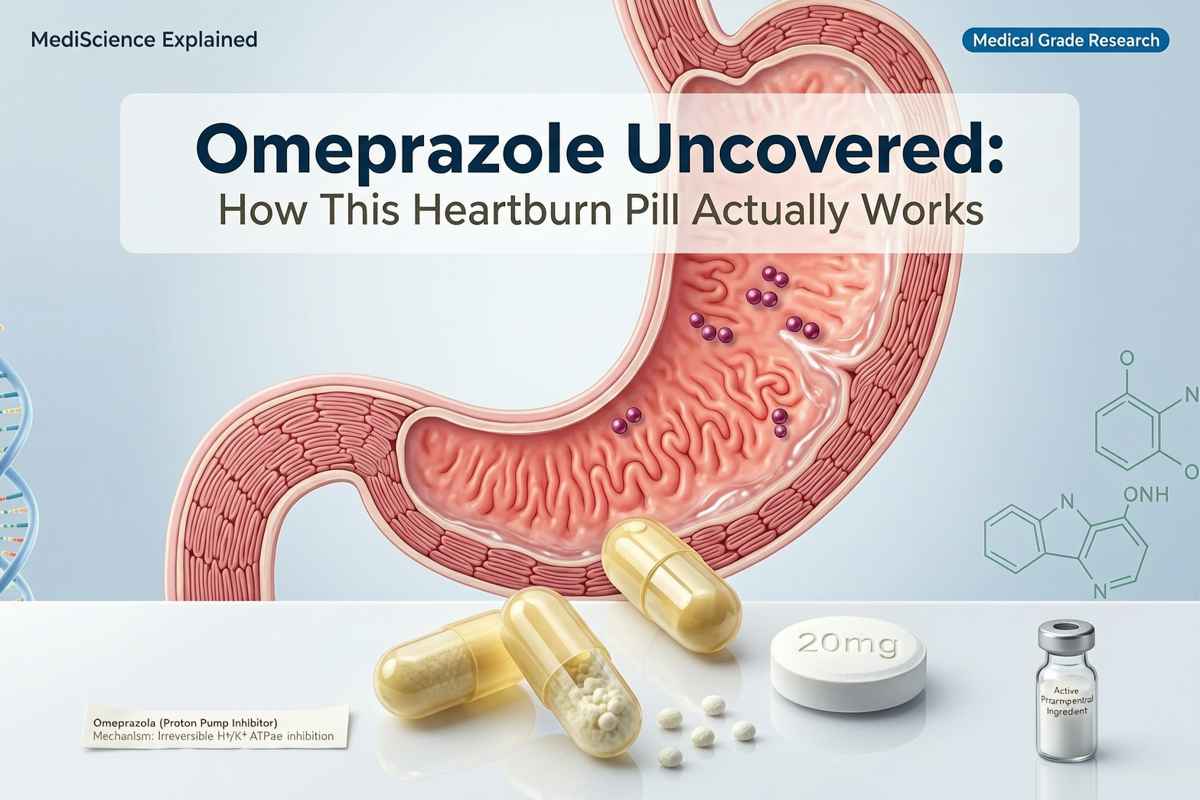
To understand omeprazole, you need to know how acid is made in your stomach. Specialized cells called parietal cells line the stomach wall. These cells contain tiny structures known as proton pumps, which are enzymes that shuttle hydrogen ions into the stomach. Chloride ions follow, and together they form hydrochloric acid. This acid is essential for digesting food and killing harmful bacteria, but when it spills into the esophagus, it causes the burning sensation we call heartburn.
Omeprazole works by blocking these proton pumps. Specifically, it inhibits the H+/K+-ATPase enzyme, the final step in acid production. When the pump is blocked, hydrogen ions cannot be secreted, and the acidity of the stomach drops significantly. The drug is a weak base, and it only becomes active in the highly acidic environment of the canaliculi, the tiny channels that connect to the proton pumps. It binds irreversibly to the enzyme, so the effect lasts until the body makes new pump proteins, which typically takes about 24 to 48 hours.
This mechanism is different from that of H2 blockers, which merely block the histamine signal that tells the parietal cell to produce acid. Omeprazole acts on the pump itself, regardless of how many stimulating signals are present. That is why it is so effective and why the drug is taken once daily, usually in the morning, to provide consistent acid suppression throughout the day.
What Is Omeprazole Used For?
Omeprazole has several clinical uses. Its primary role is treating GERD, a chronic condition where stomach acid frequently flows back into the esophagus. Symptoms include heartburn, regurgitation, and a sour taste in the mouth. By reducing acid, omeprazole allows the esophageal lining to heal and prevents further damage.
- GERD and acid reflux: It provides short-term relief for frequent heartburn and long-term maintenance for erosive esophagitis.
- Peptic ulcers: It helps heal ulcers in the stomach or duodenum and prevents them from recurring.
- H. pylori eradication: It is combined with antibiotics to kill this infection, which is a major cause of ulcers.
- Zollinger-Ellison syndrome: It manages the extreme acid hypersecretion seen in this rare tumor condition.
- Prevention of NSAID-induced ulcers: It protects the stomach lining in people who need long-term nonsteroidal anti-inflammatory drugs.
How Do You Take Omeprazole?
Omeprazole is typically taken once daily, 30 to 60 minutes before a meal, with a full glass of water. Food can delay its absorption, so taking it on an empty stomach maximizes the drug's ability to reach the proton pumps. For over-the-counter versions, the usual dose is 20 milligrams per day for 14 days. If symptoms persist, a second 14-day course may be needed, but not more often than every four months unless directed by a doctor.
Prescription doses vary. For severe GERD or erosive esophagitis, doctors may start with 40 milligrams daily. For ulcer healing, the typical dose is 20 or 40 milligrams daily for four to eight weeks. The capsules and tablets should be swallowed whole, not crushed or chewed, because the medication is formulated to release in the intestine rather than the stomach. Some formulations contain antacids for faster onset, but the classic enteric-coated pills take a day or two to reach full effect.
Potential Side Effects and Risks
Like any medication, omeprazole is not free from side effects. Most people tolerate it well, but some experience headaches, abdominal pain, nausea, diarrhea, or constipation. These symptoms often resolve as the body adjusts. More serious but uncommon side effects include low magnesium levels, vitamin B12 deficiency with long-term use, and an increased risk of bone fractures, particularly with high doses for more than a year.
Long-term use of PPIs has also been associated with an increased risk of kidney disease, dementia, and bacterial overgrowth in the intestines. However, these associations are not fully proven, and the absolute risk remains small for most people. The key is to use the lowest effective dose for the shortest duration needed. If you need daily therapy for months or years, your doctor should monitor your kidney function, vitamin levels, and bone health.
Another concern is rebound acid hypersecretion. When you stop omeprazole abruptly, your stomach may produce an excess of acid for a few days, causing heartburn to return. This is why doctors often recommend tapering the dose or switching to an H2 blocker temporarily to ease the transition.
Drug Interactions and Precautions
Omeprazole can interact with several other medications. It affects the liver's cytochrome P450 system, specifically the CYP2C19 and CYP3A4 enzymes. This can change how certain drugs are metabolized. For example, omeprazole may reduce the effectiveness of clopidogrel, a blood thinner, because both rely on CYP2C19. It can also increase blood levels of diazepam, phenytoin, and warfarin, leading to higher risks of side effects.
People taking methotrexate at high doses should use omeprazole with caution, as the PPI can delay methotrexate elimination. It may also decrease the absorption of drugs that depend on stomach acid, such as the antifungals ketoconazole and itraconazole, or the HIV medication atazanavir. Your doctor or pharmacist should always be aware of your complete medication list before you start omeprazole.
Pregnant women and those breastfeeding should discuss the risks and benefits with their doctor. The drug is generally considered low risk, but clinical data are limited. For children, omeprazole is approved for use in certain conditions, and dosing is based on weight.
Lifestyle Changes That Boost Its Effectiveness
Omeprazole is not a cure for GERD. It manages symptoms, but the underlying causes often include lifestyle factors. Elevating the head of your bed by six to eight inches can help prevent nighttime reflux. Avoiding meals within three hours of bedtime, losing excess weight, and cutting down on fatty foods, caffeine, carbonated drinks, and alcohol can reduce the frequency of reflux episodes.
Smoking also contributes to GERD by relaxing the lower esophageal sphincter. Quitting smoking, eating smaller meals, and not lying down after eating are simple yet powerful ways to support your treatment. Omeprazole will do its job, but your habits determine how well that job lasts.
Questions to Ask Your Doctor
Before starting omeprazole, consider asking your doctor the following questions:
- How long should I take this medication?
- What dose is right for me?
- Do I need any blood tests while using it?
- Can I take it with my other medications?
- What should I do if my symptoms return after stopping?
These conversations help ensure that you get the full benefit of the drug while minimizing unnecessary risks. Omeprazole is a powerful tool in the fight against acid-related disorders, but it should be used thoughtfully.
The Bottom Line
Omeprazole works by shutting down the tiny proton pumps in your stomach lining, causing acid production to fall dramatically. This makes it an exceptionally effective treatment for heartburn, GERD, and ulcers. However, it is not a quick-fix pill; it requires consistent use and lifestyle adjustments to achieve lasting relief. By understanding how it works, how to take it properly, and what precautions to follow, you can make informed decisions about your digestive health. Always consult a healthcare professional before starting or stopping any medication, and never assume that a stronger dose or longer course is better. Sometimes, the smartest approach is the gentlest one.