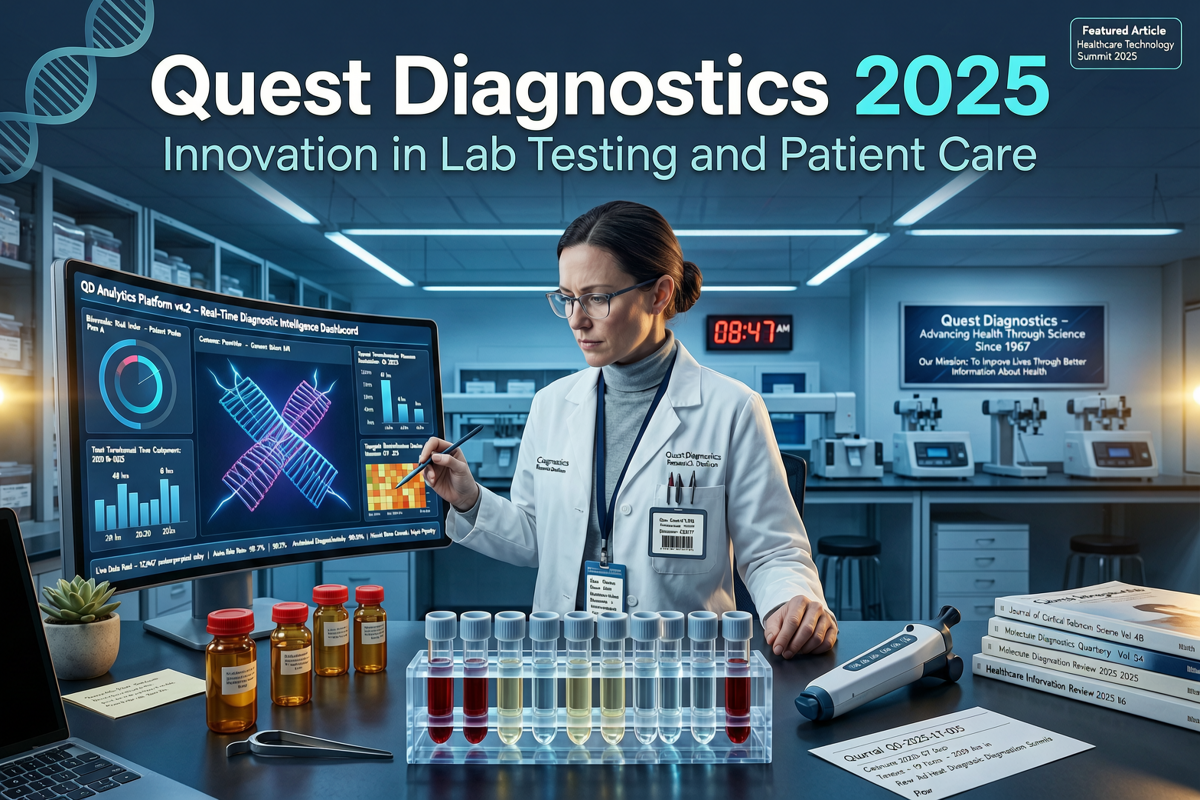
Quest Diagnostics 2025: Innovation in Lab Testing and Patient Care
Explore how Quest Diagnostics is transforming laboratory testing in 2025 with AI, at-home kits, and patient-centered innovations that redefine diagnostic care.
In the rapidly evolving landscape of healthcare, laboratory testing remains a cornerstone of accurate diagnosis and effective treatment. Quest Diagnostics, one of the world's leading providers of diagnostic information services, continues to push boundaries in 2025. With a network of thousands of patient service centers, advanced laboratories, and a commitment to innovation, Quest is redefining what it means to deliver timely, reliable, and accessible testing. This article explores the key trends and developments shaping Quest Diagnostics this year, from artificial intelligence integration to expanded at-home testing options.
The Rise of AI in Diagnostic Testing
Artificial intelligence is no longer a futuristic concept in healthcare—it's a practical tool enhancing laboratory operations. Quest Diagnostics has invested heavily in AI to improve test accuracy, turnaround times, and workflow efficiency. Machine learning algorithms now assist in analyzing complex data sets, such as genetic sequencing results and pathology slides, helping pathologists identify abnormalities faster. In 2025, Quest's AI-driven systems can flag critical results in real time, reducing the risk of missed diagnoses. Additionally, predictive analytics help optimize inventory management and staffing, ensuring that labs run smoothly even during peak demand periods like flu season.
AI-Powered Clinical Decision Support
Beyond the lab, Quest offers AI-powered clinical decision support tools for healthcare providers. These tools integrate with electronic health records to suggest relevant tests based on patient history and symptoms, reducing unnecessary testing and speeding up diagnosis. For example, a physician ordering a basic metabolic panel might receive a prompt to add a hemoglobin A1c test if the patient's records indicate prediabetes. This proactive approach not only improves patient outcomes but also reduces healthcare costs.
Expanding At-Home and Direct-to-Consumer Testing
Convenience is a major driver of patient engagement, and Quest Diagnostics has responded by expanding its at-home testing portfolio. In 2025, patients can order a wide range of tests online, collect samples at home, and mail them to Quest labs for analysis. Results are delivered digitally through a secure patient portal, often within days. Popular at-home tests include thyroid panels, vitamin D levels, food sensitivity screens, and even some genetic tests. Quest also offers a subscription model for chronic condition monitoring, such as quarterly HbA1c tests for diabetes management.
Partnerships with Retailers and Employers
To make testing even more accessible, Quest has partnered with major retailers like Walmart and CVS to offer in-store collection sites. These locations provide extended hours and walk-in appointments, making it easier for busy individuals to get tested. Additionally, Quest works with employers to offer on-site wellness screenings and occupational health testing. These partnerships help detect health issues early, reducing absenteeism and healthcare costs for companies.
Focus on Preventive and Personalized Medicine
Preventive health is a growing priority, and Quest Diagnostics is at the forefront with comprehensive wellness panels and genetic testing. In 2025, the company launched a new Preventive Health Package that includes a complete blood count, lipid panel, liver and kidney function tests, and markers for inflammation and diabetes risk. For those interested in personalized medicine, Quest offers pharmacogenomic testing that helps determine how patients metabolize certain medications, allowing doctors to prescribe the most effective drugs with fewer side effects.
Cancer Screening Innovations
Cancer remains a leading cause of death worldwide, but early detection dramatically improves survival rates. Quest has introduced a multi-cancer early detection test that analyzes cell-free DNA in the blood to identify signals from multiple cancer types, often before symptoms appear. This test is especially valuable for individuals at higher risk due to family history or lifestyle factors. In addition, Quest continues to refine its liquid biopsy technology for monitoring treatment response and detecting recurrence in cancer patients.
Digital Transformation and Patient Experience
Quest Diagnostics has invested significantly in its digital infrastructure to enhance the patient experience. The MyQuest app and online portal allow patients to schedule appointments, view results, pay bills, and communicate with care teams. In 2025, the app includes features like push notifications for result availability, educational content tailored to specific tests, and integration with wearable devices such as smartwatches. Patients can also share their results directly with multiple healthcare providers, streamlining coordination of care.
Telehealth Integration
Telehealth visits have become routine, and Quest ensures that lab testing fits seamlessly into virtual care. Providers can order tests electronically, and patients can visit a Quest location for sample collection. Results are automatically sent to the ordering physician, who can discuss them during a follow-up telehealth appointment. This integration reduces the need for in-person visits while maintaining high-quality care.
Commitment to Accuracy and Quality
Despite the rapid pace of innovation, Quest Diagnostics never compromises on accuracy and quality. The company operates one of the largest proficiency testing programs in the industry, with all labs adhering to strict quality control measures. In 2025, Quest achieved ISO 15189 accreditation for all its major laboratories, demonstrating compliance with international standards for medical laboratory quality and competence. This commitment ensures that patients and providers can trust the results.
Addressing Health Equity
Quest is also working to address health disparities by expanding access to underserved communities. The company has launched mobile testing units that travel to rural and urban areas with limited healthcare access. These units offer free or low-cost screenings for conditions like diabetes, hypertension, and HIV. Additionally, Quest provides educational materials in multiple languages and partners with community organizations to promote preventive care.
The Future of Laboratory Testing
As we look ahead, Quest Diagnostics is poised to continue leading the diagnostic industry. Emerging technologies like proteomics, metabolomics, and advanced imaging will likely become part of Quest's offerings. The company is also exploring the use of blockchain for secure data sharing and artificial intelligence for predictive modeling of disease outbreaks. With a strong foundation in innovation and patient-centered care, Quest Diagnostics is not just keeping pace with change—it's driving it.
In conclusion, Quest Diagnostics in 2025 is a model of how laboratory testing can evolve to meet the needs of modern healthcare. Through AI, at-home testing, preventive health focus, and digital transformation, the company is making diagnostics more accurate, accessible, and patient-friendly. Whether you're a healthcare provider seeking reliable results or a patient taking charge of your health, Quest Diagnostics offers the tools and expertise to support your journey.