Resume Revolution: 5 Trends Shaping Job Applications in 2025
Discover the key resume trends for 2025, from AI optimization to skills-based formats. Learn how to craft a resume that gets noticed by recruiters and ATS.
The Changing Face of the Resume in 2025
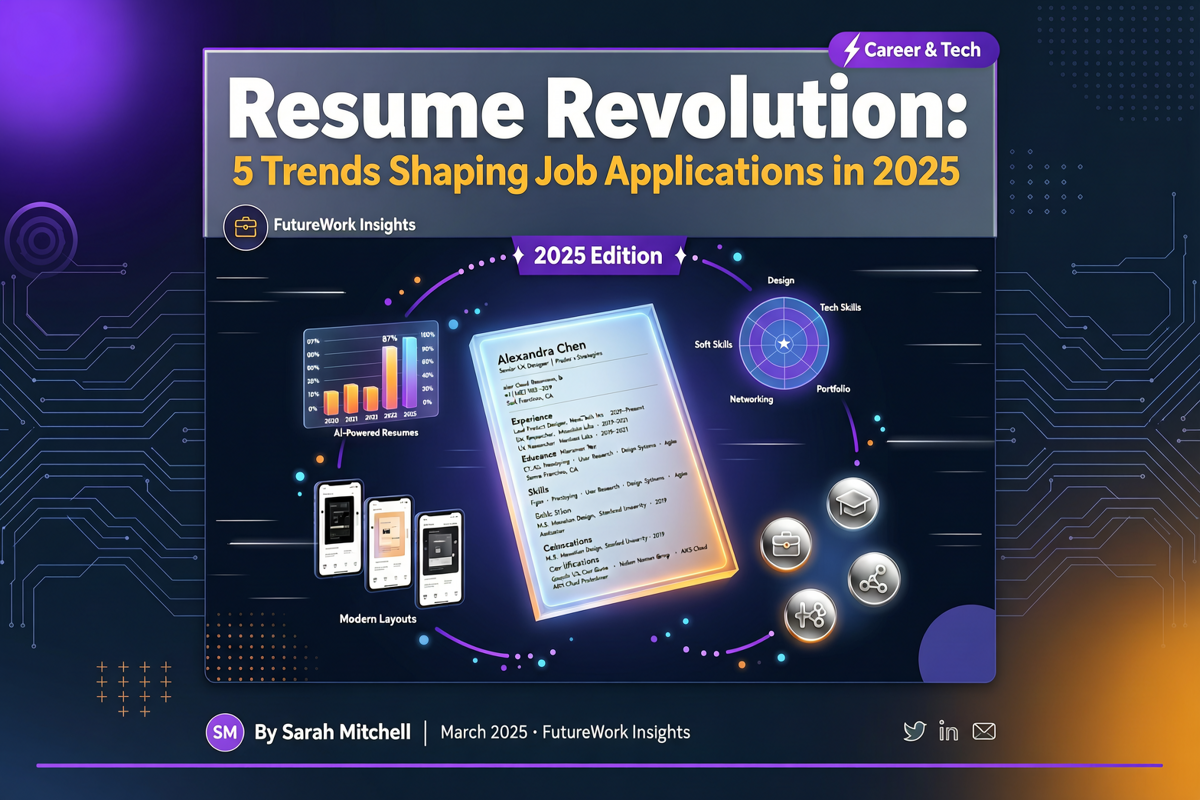
The traditional one-page resume is undergoing a radical transformation. As we move through 2025, job seekers face a landscape shaped by artificial intelligence, remote work, and evolving recruiter expectations. Your resume is no longer just a list of jobs—it’s a strategic marketing document designed to pass automated screenings and capture human attention within seconds. In this article, we explore five pivotal trends that are redefining resume writing this year.
1. AI-Optimized Content for Applicant Tracking Systems
Applicant Tracking Systems (ATS) have been around for years, but their sophistication has skyrocketed. In 2025, these systems use natural language processing to parse resumes more accurately than ever. To succeed, you must optimize your resume with relevant keywords from the job description, including variations of job titles, skills, and industry jargon. However, avoid keyword stuffing; instead, seamlessly integrate them into your experience bullet points. Use a standard font (Arial, Calibri) and avoid tables or graphics that can confuse the parser. Test your resume with free ATS simulators to ensure it reads well.
2. The Shift to Skills-Based Resumes
Many companies have abandoned the traditional chronological format in favor of skills-based or hybrid resumes. This trend accelerates in 2025, especially for roles in tech, marketing, and project management. A skills-based resume highlights your competencies at the top, followed by relevant achievements. For example, instead of listing “Marketing Manager, 2019-2023,” you lead with a “Core Competencies” section featuring “SEO Strategy, Content Marketing, Data Analysis.” This format helps recruiters quickly match your abilities to the role, and it also benefits career changers or those with gaps. Even if you stick with chronological order, consider adding a skills summary above your experience.
3. Personal Branding Through Professional Summaries
The objective statement is dead; long live the professional summary. In 2025, a powerful summary is your resume’s hook. It should be three to five sentences that encapsulate your unique value proposition, key achievements, and career goals. Use action-oriented language and quantifiable results: “Award-winning sales leader with 10+ years driving 20% year-over-year revenue growth in B2B SaaS.” Avoid generic phrases like “hardworking” or “team player.” Instead, showcase your impact. This summary often determines whether a recruiter reads further or skips to the next candidate.
4. Data-Driven Achievements Over Job Duties
Recruiters want proof, not descriptions. Every bullet point under your experience should demonstrate measurable impact. Use numbers, percentages, and timelines. For instance, instead of “Responsible for social media,” write “Grew Instagram engagement by 45% in six months through targeted content strategy.” In 2025, including metrics is non-negotiable. Even if your role was less quantitative, find ways to quantify: “Managed a team of 5” or “Reduced processing time by 30% by implementing a new workflow.” This trend aligns with the growing importance of data literacy across all industries.
5. Digital Portfolios and Link Integration
Your resume is no longer a standalone document. In 2025, it’s common to include links to your LinkedIn profile, personal website, or portfolio. Many recruiters expect to see evidence of your work online, especially for creative, technical, or marketing roles. Ensure your LinkedIn profile is up-to-date and mirrors your resume. If you have a portfolio, link to specific projects that are relevant to the job. Use clean URLs or a custom domain. However, avoid overwhelming your resume with too many links; one or two high-quality references are sufficient.
Design and Readability: Less Is More
While content is king, design matters for human readers. In 2025, minimalism wins. Use plenty of white space, consistent formatting, and no more than two fonts. Avoid overused templates from Word; consider a clean, professional layout. A touch of color (e.g., a colored header line) is acceptable, but avoid loud graphics. Remember, your resume will likely be viewed on a screen first, so ensure it’s scannable. Use bullet points, bold for key terms, and keep sections distinct.
Tailoring Every Application
Finally, the biggest mistake job seekers make is sending the same resume to every employer. In 2025, personalization is critical. Customize your resume for each job by mirroring the language of the job description and rearranging your skills to match the top requirements. This takes time but dramatically increases your chances. Use a master resume as a base and tweak it for each application. Even small changes, like adjusting your summary to include a specific company value, can make a difference.
Conclusion: Embrace the Evolution
The resume of 2025 is dynamic, data-driven, and digitally connected. By embracing these trends—ATS optimization, skills-based formats, compelling summaries, quantifiable achievements, and strategic linking—you can create a resume that not only passes automated filters but also captivates hiring managers. Stay adaptable, keep learning, and remember that your resume is a living document that evolves with your career. Start updating today, and position yourself for success in the competitive job market of 2025.