Bitcoin Price in 2025: Institutional Inflows and Macro Trends
Explore how institutional adoption, regulatory shifts, and macroeconomic factors are shaping Bitcoin's price trajectory in 2025. Key insights for investors.
Introduction: Bitcoin at a Crossroads
Bitcoin, the world's largest cryptocurrency, has entered 2025 with a mix of optimism and caution. After a tumultuous 2024 that saw prices swing from $25,000 to $70,000, the digital asset is now consolidating around $60,000 as of early 2025. This article delves into the key drivers behind Bitcoin's price action this year, from institutional inflows to macroeconomic headwinds, and what investors should watch in the months ahead.
Institutional Adoption Accelerates
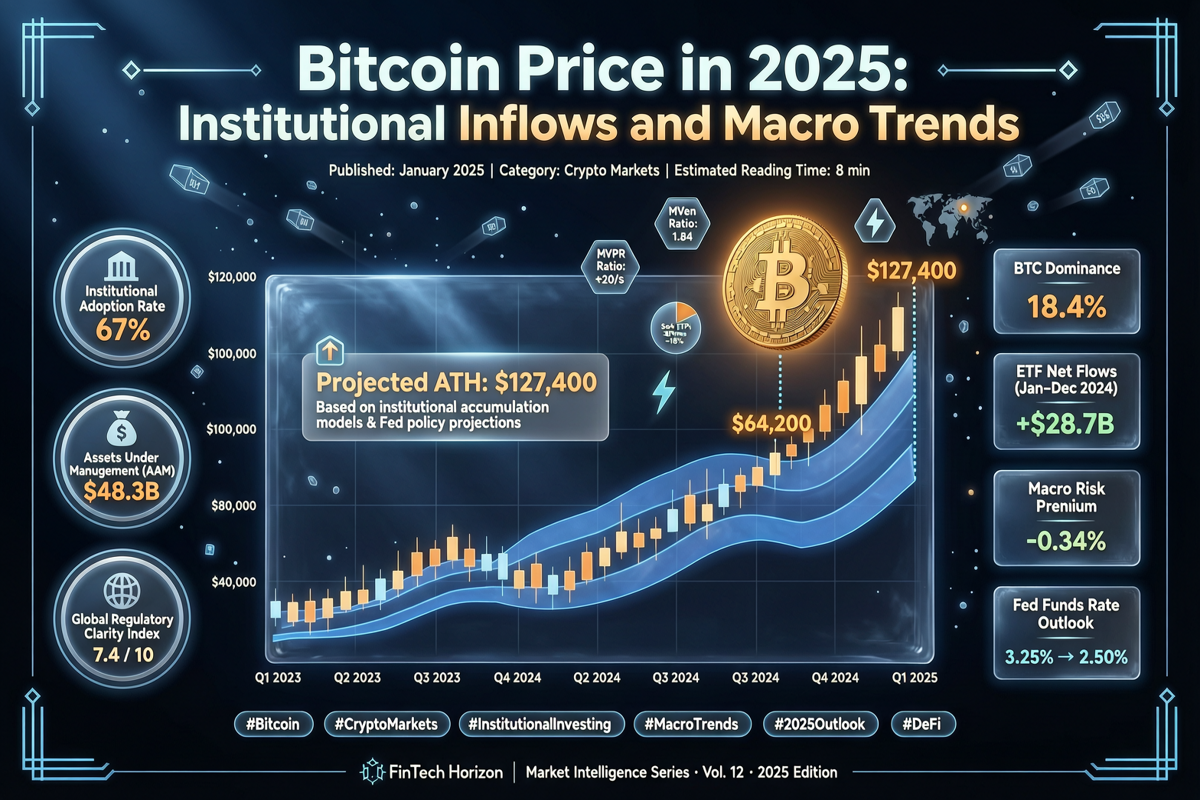
One of the most significant developments in 2025 is the deepening involvement of traditional financial institutions. Major banks like JPMorgan and Goldman Sachs have expanded their crypto custody services, while pension funds and endowments are allocating a small but growing percentage of their portfolios to Bitcoin. The approval of spot Bitcoin ETFs in the US and Europe has provided a regulated, accessible vehicle for institutional capital. In Q1 2025 alone, net inflows into Bitcoin ETFs exceeded $15 billion, according to data from CoinShares. This steady demand has provided a price floor, preventing sharp declines during periods of profit-taking.
Corporate Treasuries Embrace Bitcoin
Beyond financial institutions, corporations are increasingly adding Bitcoin to their balance sheets. Following MicroStrategy's lead, companies like Tesla, Square, and even a handful of Fortune 500 firms have allocated cash reserves to Bitcoin as a hedge against inflation. In 2025, the trend has spread to Asia, with Japanese and South Korean conglomerates announcing Bitcoin purchases. This corporate adoption not only absorbs supply but also signals long-term confidence, supporting higher valuations.
Macroeconomic Tailwinds and Headwinds
Bitcoin's price is highly sensitive to macroeconomic conditions. In 2025, the global economy faces a mixed picture. On one hand, central banks in the US and Europe have begun cutting interest rates in response to slowing growth, which tends to weaken fiat currencies and boost demand for hard assets like Bitcoin. The US Federal Reserve's rate cuts, from 5.5% to 4.5% by mid-2025, have reduced the opportunity cost of holding non-yielding assets. On the other hand, persistent inflation in some regions and geopolitical tensions (e.g., trade disputes and conflicts) have driven safe-haven flows into gold and, increasingly, Bitcoin. However, a potential recession in the EU could dampen risk appetite, capping Bitcoin's upside.
Regulatory Landscape: Clarity and Challenges
Regulatory clarity has been a double-edged sword for Bitcoin. In the US, the Securities and Exchange Commission (SEC) has provided clearer guidelines on crypto classification, with Bitcoin designated as a commodity. This has reduced legal uncertainty for exchanges and funds. Europe's MiCA regulation, fully implemented in 2025, has created a unified framework that encourages institutional participation. However, stricter anti-money laundering (AML) rules and tax reporting requirements have increased compliance costs, potentially squeezing smaller players. Meanwhile, China's continued ban and India's uncertain stance limit adoption in key markets. Overall, the regulatory environment is more supportive than in previous years, but not without friction.
Supply Dynamics: Halving Effect Lingers
The fourth Bitcoin halving, which occurred in April 2024, reduced the block reward from 6.25 to 3.125 BTC. Historically, halvings have preceded significant price rallies within 12-18 months, as the reduced supply growth meets steady or rising demand. In 2025, the daily issuance is approximately 450 BTC, down from 900 before the halving. This supply squeeze is amplified by the fact that a large portion of circulating Bitcoin is held by long-term investors (HODLers) who rarely sell. On-chain data shows that over 70% of Bitcoin has not moved in over a year, indicating strong conviction. This illiquid supply supports price stability and gradual appreciation.
Technical Analysis: Key Levels to Watch
From a technical perspective, Bitcoin's price is trading within a broad ascending channel that has been in place since 2023. The $50,000 level has acted as strong support, while resistance is clustered around $70,000-$75,000. A breakout above $75,000 could trigger a rally toward the all-time high of $80,000, while a drop below $50,000 might signal a deeper correction to $40,000. The 200-day moving average, currently at $55,000, is a critical trend indicator. As of early 2025, Bitcoin is above this level, suggesting a bullish bias. However, the Relative Strength Index (RSI) is hovering around 60, indicating room for upside before becoming overbought.
Conclusion: Navigating the Bitcoin Market in 2025
Bitcoin's price in 2025 is being shaped by a confluence of factors: institutional inflows provide steady demand, macroeconomic conditions offer both tailwinds and headwinds, regulatory clarity reduces uncertainty, and supply dynamics favor appreciation. While short-term volatility is inevitable, the long-term outlook remains positive for those who can withstand the swings. Investors should monitor ETF flows, central bank policies, and on-chain metrics to gauge market sentiment. As always, diversification and risk management are key. Bitcoin may not be a sure bet, but its role in global finance is increasingly undeniable.